
 Cart is empty
Dear community,
Spring feels like it’s arriving early this year and following a winter of deepening into the core values that sit at the heart of ITT, new shoots are emerging here at Integrated Trauma Therapy.
One reflection that has been growing for me is the importance of systems of support and the difference it can make when we are not healing, learning or working alone, but are connected with others who can see us, support us and share in the experience.
Thinking about this I turned to ‘How to Know a Person: The Art of Seeing Others Deeply and Being Deeply Seen’, by David Brooks. He writes about a “Community of Truth” – a space where people can speak with honesty and respect and where something greater can emerge through connection with one another.
One of his ideas that stayed with me is the image of a thought as a circuit: one person shares a thought, another receives it and that same circuit now exists across more than one mind. David also draws on the work of cognitive scientist Douglas Hofstadter, who describes how these loops can move between people. When this happens within a group, minds can begin to intermingle – this is fascinating to me. In this sense, conversation can become something different from empathy alone — ideas, experience and understanding are carried, changed and developed through the group itself.
This resonates deeply with the way I understand support and therapeutic work and it’s something that underpins the work we do here at ITT. I can see that when people come together around a shared experience, the impact of a skill, practice or therapeutic process can deepen through the group itself – through being witnessed, understood, supported and held by others who are present. The learning does not belong to just one person. The experience becomes part of a wider system. And that is a beautiful and powerful thing.
For us as practitioners, this matters in another way too. A practitioner who is supported can bring a different quality of presence to the people they work with. When we have places where we can be curious, uncertain, reflective and resourced ourselves, we may have more capacity to stay alongside complexity in our client work. I know this is true for me.
“To be held by a practitioner who themselves feels held, supported and connected can be a deeply reparative experience.”
This feels close to an important part of ITT’s core values: support is not only something practitioners provide, it is also something we need to participate in ourselves.
Go gently,
~ Tania Virgona
Arts Based Online Group Supervision
~ Support is part of the work ~

I think we can all understand how therapeutic work can carry a particular kind of isolation. Much of it happens privately, one relationship at a time, while the practitioner is holding clinical information, bodily responses, uncertainty, responsibility and the complexity of another person’s experience.
Reflective practice and supervision create somewhere for that work to be brought back into relationship. The purpose is not simply to arrive at a correct answer. It is to widen the field of attention: to consider what may be happening in the client, in the practitioner, in the therapeutic relationship and in the wider system around the work.
Arts-based reflection can add another dimension. An image, mark, shape or visual response can sometimes make room for material that is difficult to organise immediately into language. Alongside Somatic Experiencing and Polyvagal-informed perspectives, this can support practitioners to remain curious about what they are noticing rather than rushing to resolve complexity.
ITT’s Arts-Based Online Group Supervision provides a structured space for practitioners to bring client work into reflective conversation. A practitioner may present the context and course of the work, therapeutic aims, challenges, questions and learning edges. The group is invited to respond with curiosity, including through visual reflection, while arts-based, Somatic Experiencing and Polyvagal-informed perspectives can be integrated into the discussion.
September session: Thursday 17 September 2026, 4:30–6:30 pm AEST | bookings close Wednesday 16 September
October session: Friday 30 October 2026, 4:30–6:30 pm AEDT | bookings close Wednesday 28 October
November session: Thursday 26 November 2026, 4:30–6:30 pm AEDT | bookings close Wednesday 25 November
Location / cost: Online | $95 incl. GST
Supervision credit: Each 2-hour session contributes 2 hour of supervision credit
Learn more / book group supervisior
SEP Touch Retreat — Saturday 12 September

Systems of support are also at the heart of September’s SEP Touch Retreat, an invitation for Somatic Experiencing® Practitioners to step out of the isolation that can come with clinical work and return to a supportive practitioner community.
The day will explore the role of the diaphragm system in managing traumatic stress, with Alaine Duncan joining live from the US. The teaching weaves Kathy Kain’s Touch Skills with Five Element concepts from the Tao of Trauma, alongside opportunities for giving and receiving somatic touch, reflection, connection and shared presence.
The intention is not performance or productivity, but a day of being supported, resourced and restored. Only a few spots left
Date: Saturday 12 September 2026
Time: 9:30 am–4:30 pm
Location: The Michael Centre – Movement Room, 37A Wellington Park Drive, Warranwood VIC 3134
Investment / capacity: $400 + GST | maximum 15 participants
Learn more about the SEP Touch Retreat
Growing the ITT practitioner community

At ITT, systems of support are also taking shape within the practitioner team. We are continuing to grow a community where practitioners can support one another, deepen their skills and bring their own grounded presence into their work.
Our practitioners currently offer support across a range of modalities:
Somatic Experiencing® and specialities: Katie, Narelle, Roberta and Tania
Art Therapy: Carolyn, Ruby and Tania
For us, support is not simply something we offer to others. It is something we create together – through connection, shared learning and a professional culture in which practitioners can also feel held.
Meet our practitioners
A referral pathway for children and families
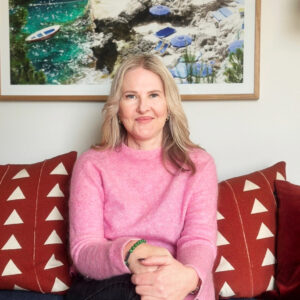
Within this wider practitioner community, Roberta Mantineo offers a useful referral pathway for children, adults and families. Roberta is a Counsellor and Somatic Experiencing Practitioner (SEP), with more than 17 years of experience in education supporting children across a range of learning and behavioural needs, alongside her therapeutic work with trauma, stress, grief and emotional regulation.
Roberta’s work is relational and body-based, with particular relevance for children and families who may benefit from developmentally attuned, play-based somatic support. This sits within ITT’s broader approach of working with nervous-system regulation, relationship, creativity and the individual pace of the person seeking support.
From 23 September, Roberta will be available on Wednesdays and Thursday afternoons.
If a client or family in your professional network may benefit from this kind of support, you can read more about Roberta and ITT’s available individual therapy pathways below.
Explore individual therapy and referral options
Looking ahead to December
Using Art Therapy to Explore Shame
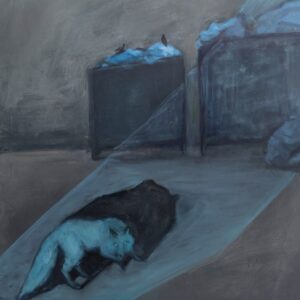
Shame on you blue eye by Nastya Didenko
Early December brings another practitioner professional development offering: Using Art Therapy to Explore Shame.
Shame can be difficult to identify because it may present in subtle and varied ways in clients and in ourselves. This online professional development explores how shame presents in the nervous system through Somatic Experiencing® and Polyvagal frameworks, including the difference between toxic traumatic shame and healthy shame.
The session uses Art Therapy to explore the experience of shame and ways of supporting repair, with particular relevance for practitioners working with CPTSD, addiction recovery, survivors of violence and sexual abuse, developmental trauma and neglect.
Date: Thursday 3 December 2026
Time: 12:00–4:00 pm AEDT
Location: Online
Registration & payment by: Monday 30 November 2026
Investment / group size: $335 incl. GST | minimum 4 / maximum 8 participants
Learn more / book Using Art Therapy to Explore Shame
Looking ahead — Tao Trauma in Australia
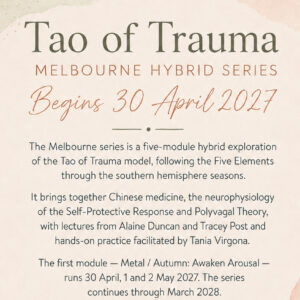
More information is now available for the Hybrid Immersive Tao of Trauma Series coming to Melbourne in 2027.
The Melbourne series is a five-module hybrid exploration of the Tao of Trauma model, following the Five Elements through the southern hemisphere seasons. It brings together Chinese medicine, the neurophysiology of the Self-Protective Response and Polyvagal Theory, with lectures from Alaine Duncan and Tracey Post and hands-on practice facilitated by Tania Virgona.
The first module — Metal / Autumn: Awaken Arousal — runs 30 April, 1 and 2 May 2027. The series continues through March 2028.
The training is relevant to practitioners across mental health, allied health, acupuncture and body-based disciplines, including Somatic Experiencing® Practitioners. Full programme dates, fees and registration information are now available.
Explore the ITT Tao of Trauma Australia 2027 page | View Tao of Trauma workshops
A final thought
One of the things I hope continues to grow at ITT is a culture in which support is not simply something we offer outwards. It is something we create together – as practitioners, colleagues, clients and community.
If you are a Somatic Experiencing® Practitioner who appreciates these values and would like to be part of the ITT team, we would love to hear from you.
As spring brings new growth, I hope we can continue to nurture these systems of connection, support and shared learning: noticing where we are well supported, where we may be carrying something alone, and what might become possible with another person, another perspective or a wider system alongside us.
Art Therapy Studio Hire
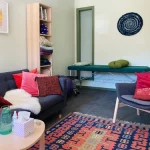
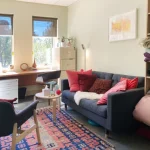
Are you a practitioner looking for a welcoming and creative space to host your workshops or sessions? Our Art Therapy Studio is available for hire on weeknights from 6pm and on weekends for either full-day or half-day bookings.
Located at ITT in Warrandyte, the studio is ideal for one-off events or ongoing programs. It includes a waiting room, kitchenette, toilet facilities, and a large, well-equipped art-making space that comfortably accommodates up to 20 participants.
This space is perfect for art therapists, facilitators, or community groups seeking a nurturing environment that encourages reflection, creativity, and connection. To find out more or to make a booking, visit: https://integratedtraumatherapy.com.au/room-hire-copy
The space includes:
- A waiting room, kitchenette, and toilets
- Extensive art equipment
- Capacity for up to 20 participants
Whether you’re planning a one-off workshop or ongoing sessions, this versatile and well-equipped space is ideal.
If you’d like to learn more about these exciting new offerings, feel free to reach out. Let’s make 2025 a year filled with creativity, connection, and healing!


Why Support is Important
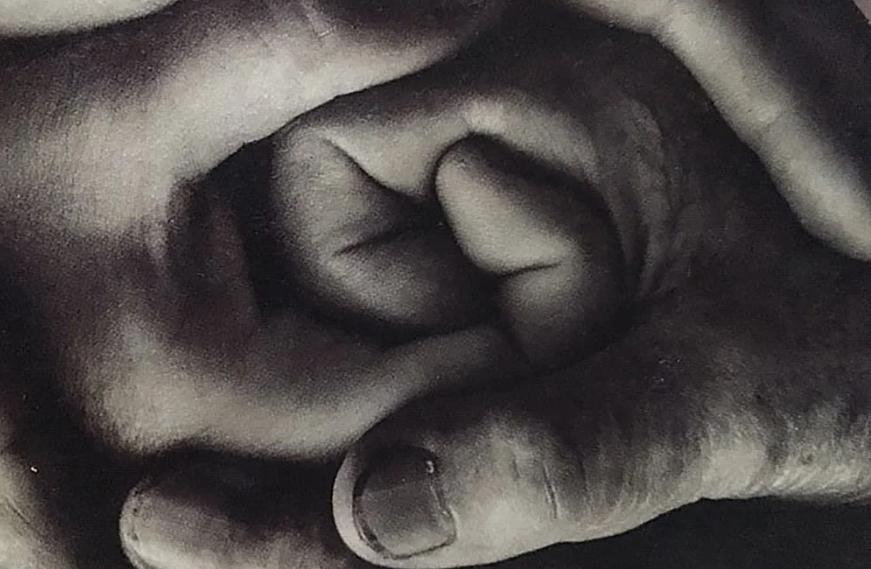
Supporting practitioners has always been a special interest of mine. Since training in Somatic Experiencing and incorporating it into my work, I’ve come to see how central support is to trauma recovery. So much of healing is about re-establishing a relationship with the parts of ourselves that trauma has fractured or pushed aside.
Trauma often works by compartmentalising aspects of our identity—our bodies, beliefs, emotions, even our memories. While this can be a protective mechanism in moments of crisis, it can leave us feeling fragmented or disconnected over time. What’s often missing in those traumatic moments is the presence of support. The absence of someone beside us, witnessing us, holding us, being with us.

Reintroducing waves of support into the healing process—whether through therapeutic relationships, peer connections, or group settings—can be profoundly reparative. Sometimes support comes in subtle forms: the feel of the chair beneath you, a grounding breath, a familiar object or image. In art therapy, supportive symbols can show up in surprising ways—through colour, materials, shapes, or archetypes. We often see clients finding strength in creating images of animals, mentors, or safe spaces.
Gathering in groups to support one another builds what Kathy Kain describes as a “matrix of support”. I draw on this matrix every day: the teachers, mentors, colleagues, and communities who have shaped and upheld me and this network helps me hold others.
Support doesn’t always need to be big or dramatic. It can be simple and quiet. But when it’s present, life feels so much lighter. We feel less alone. And we remember that we’re part of something greater.
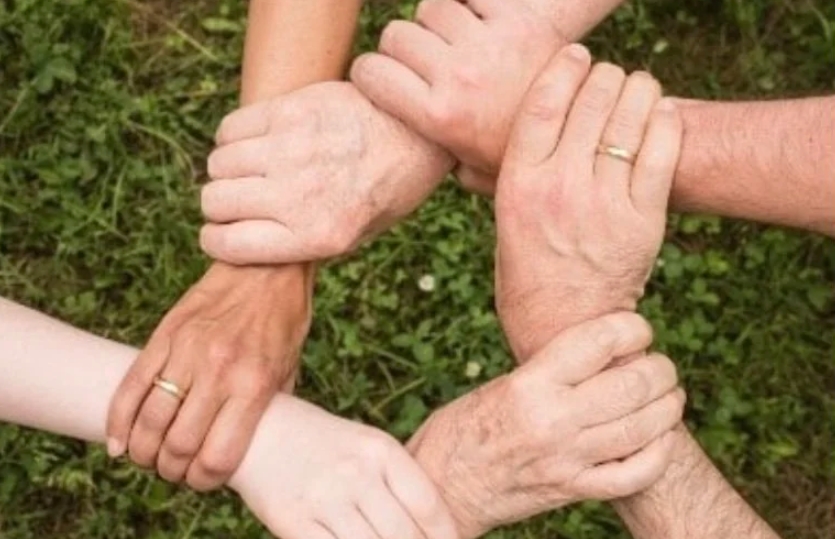
At ITT, support is a core value that underpins everything we do together. Whether in supervision groups, attending professional development, participating in a creative workshop, or receiving trauma therapy, my hope is that everyone will feel that sense of support—real, grounded, and sustaining.
Check out the ITT Resource Page
There is a selection of resources on the ITT resource page that maybe useful to you or your clients:
https://integratedtraumatherapy.com.au
Thank you for reading.
Take care,
Tania
Leave Your Comment